+86-18363688899


You can check out [Spheroidal Cast Iron](https://www.foundrycaststeel.com/spheroidal-cast-iron), which has become pretty popular across different industries because of its excellent mechanical properties. I read somewhere that the global market for cast iron is expected to hit around $55 billion by 2027—that’s a massive jump! It really highlights just how important this material is in manufacturing and engineering these days.
Spheroidal Cast Iron, sometimes called ductile iron, is a real game-changer because it’s both strong and flexible. That's why you’ll see it often in stuff like car parts, pipes, or even heavy machinery components. It’s particularly good at handling high pressure, which makes it super versatile. However, picking the right type for your project isn’t always straightforward. There are quite a few factors to keep in mind—like tensile strength, how well it resists corrosion, and obviously, cost.
There are tons of suppliers out there offering different kinds of Spheroidal Cast Iron, but not all of them meet the same standards. It's really important to do your homework—check the supplier’s reputation and make sure the material specs match what you need. Get it right, and your project’s gonna be much more durable; mess up, and you might end up facing some costly failures. So, taking the time to evaluate your options carefully is definitely worth it in the end.

Spheroidal cast iron, also known as ductile iron, offers unique properties that benefit various projects. Its spherical graphite structure gives it exceptional strength and ductility. This makes it ideal for applications requiring high durability, such as automotive parts and piping systems.
One of the key benefits of spheroidal cast iron is its resistance to shock and wear. This material can withstand harsh environments. However, it is essential to consider the specific requirements of your project. For instance, while it performs well under pressure, excessive heat can compromise its integrity. Understanding these factors is crucial for effective use.
The machinability of this iron is notable, yet it may require specialized tools. This factor can lead to increased costs and time in production. Reflecting on the balance between benefits and limitations can help inform your choices. Spheroidal cast iron is not always the best option, but its unique properties can be invaluable when applied correctly.
Spheroidal cast iron, or Spheroidal Graphite Iron, is increasingly popular in various industries. Its unique structure offers outstanding mechanical properties, making it suitable for many applications. For example, in the automotive industry, it’s used for gearboxes and engine blocks. These parts need to withstand heavy stresses and vibrations.
In the construction sector, Spheroidal Graphite Iron is used for manhole covers and pipes. Its durability ensures long-lasting solutions. However, it can be challenging to select the right grade for a specific application. Not all Spheroidal cast iron grades perform the same under different conditions. Careful consideration is needed here.
Moreover, the manufacturing process can also influence the end product's quality. Improper casting techniques may lead to defects such as poor surface finish or incorrect mechanical properties. Understanding these variables is key to achieving the desired outcomes. The right choice can lead to successful projects, while a misstep may lead to costly mistakes.
When selecting spheroidal cast iron, several factors come into play. One major aspect is the material's mechanical properties. Spheroidal cast iron is known for its excellent tensile strength and ductility. According to industry reports, it can provide tensile strength up to 750 MPa, making it suitable for various demanding applications. Understanding these properties helps in choosing the right specification for your project needs.
Another consideration is the casting method. The production process can influence the microstructure and properties of spheroidal cast iron. For instance, the cooling rate during casting affects the formation of graphite nodules, which enhance the material's performance. Experimentation is often necessary to achieve the desired results, as not every method will yield the same quality. It’s important to evaluate your project's unique requirements and understand the potential trade-offs involved.
Quality control is crucial in ensuring that the cast iron meets specific standards. Inconsistent quality can lead to project failures or delays. Statistics suggest that nearly 30% of cast iron components fail during their service life due to manufacturing defects. Regular testing and adherence to industry standards can help mitigate such risks, but it's essential to remain vigilant and proactive during production.
| Factor | Description | Importance |
|---|---|---|
| Mechanical Properties | Consider the tensile strength, yield strength, and ductility of the spheroidal cast iron. | High |
| Corrosion Resistance | Assess the resistance to environmental factors and chemical exposure. | Medium |
| Casting Method | Choose an appropriate method based on the desired product quality and cost. | High |
| Thermal Properties | Understand how the material behaves under high temperatures. | Medium |
| Cost Considerations | Evaluate the cost in relation to project budget and expected performance. | High |
| Application Suitability | Determine if spheroidal cast iron is appropriate for the specific application. | High |
Spheroidal cast iron, known for its unique microstructure, has emerged as a critical material in engineering applications. Its mechanical properties are impressive. The material exhibits high strength and ductility, making it suitable for various structural components. A report by the American Foundry Society indicates that the tensile strength can range from 300 to 700 MPa, depending on the specific alloy and heat treatment process.
One of the standout features of Spheroidal Graphite is its ability to withstand shock loads. This characteristic makes it ideal for applications such as automotive parts and heavy machinery. Research shows that parts made from this iron can endure stress better than traditional cast iron due to its spheroidal carbon structure. However, the trade-off can be cost and availability. Not every foundry can produce high-quality spheroidal graphite.
Additionally, while its corrosion resistance is better than that of standard grey iron, it is not infallible. Some environmental factors can still cause degradation. The reported fatigue limit varies significantly, often cited around 200-300 MPa under continuous loading. This variance suggests that careful consideration is essential when designing systems utilizing spheroidal cast iron. Assessing specific project requirements against these properties is vital.
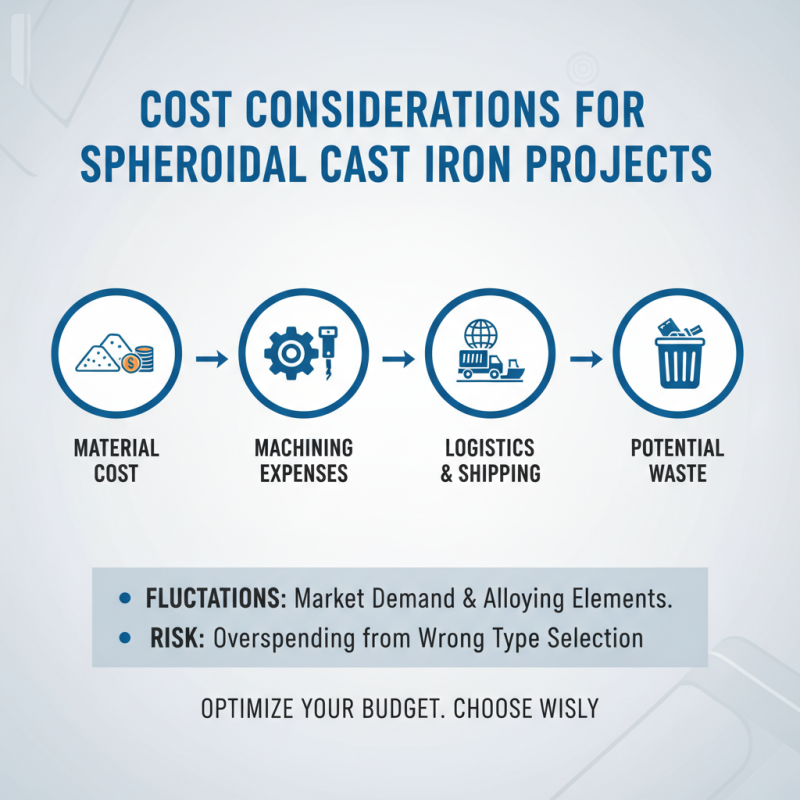
When evaluating the cost of Spheroidal Cast Iron for your projects, several factors come into play. The initial material cost is just one aspect. You also need to consider machining expenses, logistics, and potential waste. Costs can fluctuate based on market demand and specific alloying elements. Choosing the wrong type may lead to overspending and wasted resources.
Machining Spheroidal Graphite Casting can be more complex than other materials. This complexity can increase the labor cost. If your design isn't precisely aligned with material capabilities, you might encounter delays. Unexpected issues often arise during the production process. These can lead to more financial strain and project setbacks.
It's crucial to assess potential risks thoroughly. Not every project needs expensive material. Sometimes, a simpler option could provide similar results at a lower cost. Trial runs or prototypes can help gauge actual expenses before scaling up. Ultimately, a well-thought-out approach can make a significant difference in your budget.
When working with spheroidal cast iron components, understanding processing techniques is crucial. Ductile iron, also known as nodular iron, has unique properties that benefit various applications. These include high strength, ductility, and excellent wear resistance. However, processing can be complex.
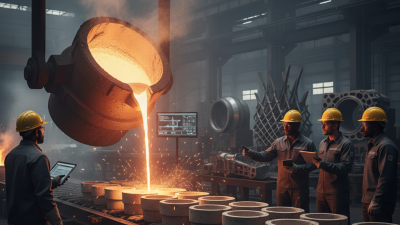
Casting is the initial step for spheroidal cast iron. Proper control of temperature and cooling rates is vital. Inadequate control can result in poor mechanical properties. Patterns used in casting must be designed to allow for uniform thickness to avoid weak points. Before casting, the alloy composition should be analyzed. Impurities can affect the final product's integrity.
Heat treatment often follows casting. This step can enhance the mechanical performance of ductile iron precision castings. However, achieving the right heat treatment cycle requires careful monitoring. Deviations can lead to unexpected outcomes. In some instances, the mechanical properties may not meet desired standards, prompting further adjustments. Understanding these nuances in processing ensures the reliability of spheroidal cast iron components in any project.
This chart displays the key mechanical properties of spheroidal cast iron, highlighting its tensile strength, yield strength, elongation, and hardness, which are essential for assessing its suitability in various engineering applications.
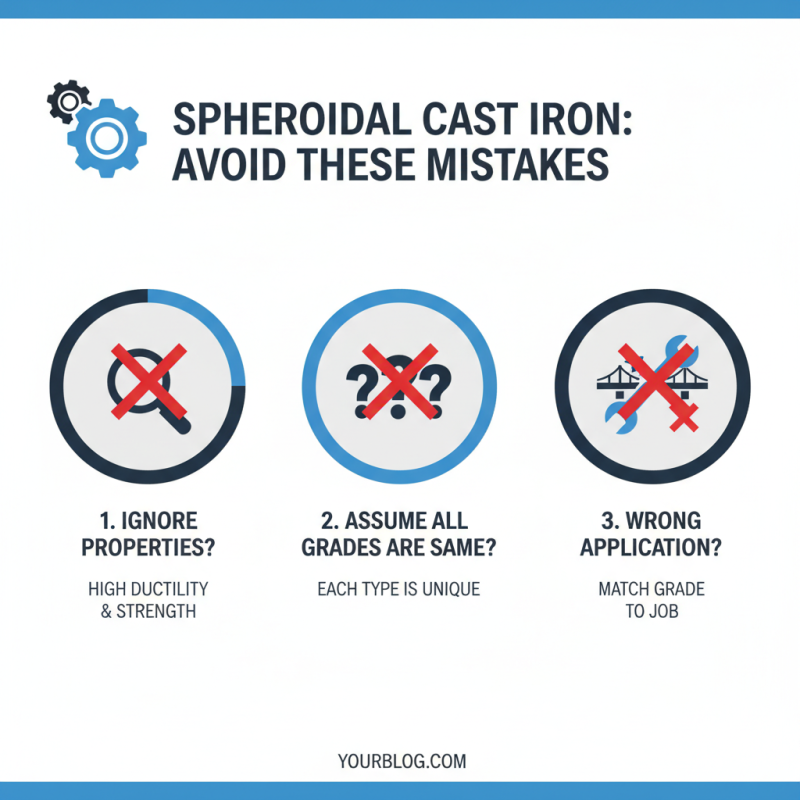
When working with spheroidal cast iron, many make common mistakes. One prevalent error is overlooking the material's properties. Spheroidal cast iron boasts unique characteristics, such as high ductility and strength. However, assuming all grades are identical can lead to project failures. Not every type performs optimally in every situation.
Another mistake involves neglecting the casting process. It is crucial to use the appropriate temperature and cooling rate. Overheating can cause defects, while rapid cooling may lead to brittleness. Understanding the casting techniques associated with spheroidal cast iron is vital. A proper approach can significantly enhance the final product's performance.
Finally, don’t forget about post-processing. Many forget the importance of surface treatment or machining. These steps are essential for achieving the desired finish and mechanical properties. Rushing through these phases can result in parts that do not meet specifications. Take the time to refine every detail for better outcomes.
: Spheroidal cast iron, or ductile iron, has a unique spherical graphite structure. It provides exceptional strength and ductility.
It offers high durability, resistance to shock, and wear protection. These qualities make it suitable for various applications.
Excessive heat can compromise its integrity. It's important to consider temperature limits during usage.
Its machinability is notable but may require specialized tools, which can increase production costs and time.
Casting is the first step. Proper temperature and cooling control are vital for good mechanical properties.
Analyzing the alloy composition helps avoid impurities. Impurities can negatively affect the final product's strength.
Heat treatment typically follows casting. This enhances mechanical performance but requires careful monitoring to avoid issues.
Deviations in heat treatment can lead to unexpected outcomes, affecting the mechanical properties of the components.
It's not always the best fit. Evaluating the specific project requirements can determine if it's the right choice.
Patterns need uniform thickness to prevent weak points in the final product, which is crucial for overall performance.
Spheroidal Cast Iron, known for its unique properties and benefits, plays a significant role in various industries. Its excellent mechanical performance, including high tensile strength and ductility, makes it an ideal choice for components subjected to dynamic loads. When selecting Spheroidal Cast Iron for projects, several factors must be considered, such as its applications, mechanical properties, cost implications, and processing techniques. Understanding these aspects helps in avoiding common pitfalls associated with its use.
Moreover, Spheroidal Cast Iron can be processed in various ways to meet specific project requirements, ensuring optimal performance. By carefully considering these elements, engineers and project managers can make informed decisions that enhance their project's success while leveraging the unique advantages of Spheroidal Cast Iron.